
Execution Plans

A Strange Place For A Memory Grant

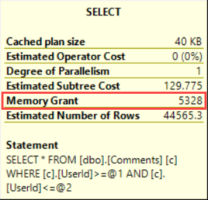
If You Hang Around Fetish Bars Long Enough… You learn things about memory grants in execution plans. Stuff like the things that usually need memory Hash Join Hash Match Sort Parallelism Exchanges But there’s something that rarely gets discussed, even in the deepest, darkest, dankest dungeons. Let’s loosen the clamps and look at it. Keys…
Read More

Trivial Plans, Simple Parameterization and Check Constraints

Execution Plans, Indexing
0
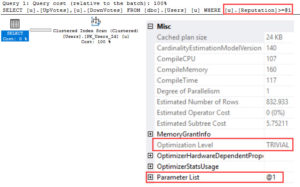
Trivial Plans Are Weird They’re the optimizer’s “Yes, Dear”.  The thing is, sometimes “Yes, Dear” can miss some important details. Cost based decisions about operators Potential index improvements Contradiction detection for check constraints Simple parameterization, according to… uh… Official Microsoft documentation? Can only occur in a Trivial Plan. Which makes sense. Simple parameterization is considered…
Read More

When Query Plans Lie Part 2

Getting Weirder In Part 1, we looked at how query plans can tell us little lies. Now we’re going to look at how those little lies can turn into bigger lies. Adding An Index Right now, this is our query: Transact-SQL SELECT u.UpVotes, u.DownVotes FROM dbo.Users AS u WHERE u.Reputation >= 100000; 123 SELECT u.UpVotes,…
Read More

Hey, That’s Not My Sort!

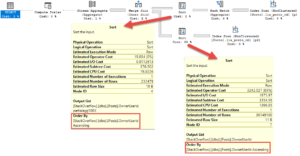
Understand Your Plan Mr. Optimizer does the rock n roll hoochie koo with Mrs. Optimizer, c. 1953. When reading query plans, you may sometimes see a sort when you didn’t explicitly ask for data to be sorted. Sometimes they show up to support order-preserving operators like stream aggregates, merge joins, or segments. Other times, they…
Read More

Concurrency Week: How Entity Framework and NHibernate Can Cause Poison RESOURCE_SEMAPHORE Waits

Development, Memory Grants
6 Comments
I’ve already blogged about my dislike for ORMs from a production DBA performance tuning standpoint only. I get that they’re useful to developers. I get it. But I’m focused on performance. A quick recap of what I don’t like about ORMs from that other blog post: Implicit conversions due to nvarchar variables vs varchar columns…
Read More

The Many Mysteries of Merge Joins

Not A Single Picture Of A Zipper Image humbly borrowed from https://70srichard.wordpress.com/2014/12/17/beverly-hills-cop/ There are some interesting things about Merge Joins, and Merge Join plans that I figured I’d blog about. Merge joins have at least one interesting attribute, and may add some weird stuff to your query plans. It’s not that I think they’re bad,…
Read More

Hash Join Memory Grant Factors

Buskets Much like Sorts, Hash Joins require some amount of memory to operate efficiently  — without spilling, or spilling too much. And to a similar degree, the number of rows and columns passed to the Hashing operator matter where the memory grant is concerned. This doesn’t mean Hashing is bad, but you may need to…
Read More

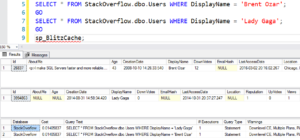
Why Multiple Plans for One Query Are Bad

I’m going to demo this using the Stack Overflow public database. We’ll use the Users table – which has exactly what you think it has, everyone who’s asked/answered/commented at StackOverflow.com. I need to search for people by their DisplayName, so I’ve created an index on that: Transact-SQL CREATE INDEX IX_DisplayName ON dbo.Users(DisplayName); 1 CREATE INDEX…
Read More

Why sp_prepare Isn’t as “Good” as sp_executesql for Performance

sp_prepare For Mediocre You may remember me from movies like Optimize for… Mediocre? and Why You’re Tuning Stored Procedures Wrong (the Problem with Local Variables)! Great posts, Kendra! Following the same theme, we found this issue while looking at queries issued from JDBC. Specifically, the prepared statement class seems to cause queries to hit the density vector…
Read More