SQL Server

Introducing sp_BlitzCache®

Finding the worst queries in SQL Server is easy, right? You just query one of the dm_exec_* DMVs, bring in the SQL text and the execution plan, and then you spend hours looking at execution plans trying to figure out what’s wrong in the query, much less how to fix it. All that’s changing – we’re introducing sp_BlitzCache®.…
Read More

Tiering kCura Relativity Databases (Or Any SaaS Product)

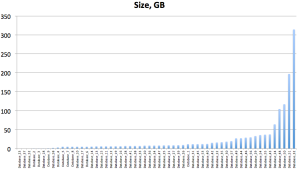
When you’re the database administrator working with a software product that stores every client’s data in a different database, the sheer number of databases can be intimidating. As you grow from dozens to hundreds to thousands of databases, you can’t treat all of them equally. Start by making a graph of the database sizes –…
Read More

Introduction to Extended Events (video)

SQL Server
2 Comments
Extended Events were introduced with SQL Server 2008. Extended Events is a replacement for Server Side Traces and so much more – it’s a lightweight way to look at SQL Server performance, events, deadlocks, locking, blocking, and more. In this webcast, Jeremiah Peschka provides a high-level introduction to Extended Events. You’ll learn about how Extended…
Read More

Advice to an IT newcomer

SQL Server
4 Comments
Women in Technology (yes, Clippy is a woman, too) We recently got the following question for Kendra and Jes in the Brent Ozar Unlimited® mailbox: Six months ago I stumbled into the IT world. Do you have any advice for someone (a woman) starting off in the IT industry, specially someone without a computer science…
Read More

SQL Server 2014 Buffer Pool Extensions

SQL Server
59 Comments
SQL Server 2014 contains some interesting new features. Although SQL Server Standard Edition is limited to 128GB of memory, teams deploying on Standard Edition have an option to fit more of their working set in low latency storage – SQL Server Buffer Pool Extensions. How SQL Server Normally Deals With Data During SQL Server’s normal…
Read More

Are Table Variables as Good as Temporary Tables in SQL 2014?

There’s a couple of new features in SQL Server 2014 that provide options for how you work with temporary objects. Will inline index creation or memory optimized temporary tables forever change the way you code? Let’s take a look! Inline Index Creation SQL Server 2014 brings us a TSQL improvement called “inline specification of CLUSTERED…
Read More

Microsoft Cloud Rebranded as Microsoft Pale Blue

SQL Server
15 Comments
It’s time to learn another new set of acronyms. Effective today, Microsoft’s as-a-service brand is changing names again. As recently as last week, the product’s name had been changed from Windows Azure to Microsoft Azure, but industry observers noted that Microsoft’s web pages actually referred to a different name – Microsoft Cloud. “Our research found that the…
Read More

Refactoring T-SQL with Windowing Functions

SQL Server, T-SQL, Videos
6 Comments
You’ve been querying comparative numbers like Year To Date and Same Period Last Year by using tedious CTEs and subqueries. Beginning with SQL Server 2012, getting these numbers is easier than ever! Join Doug for a 30-minute T-SQL tune-up using window functions that will cut down dramatically on the amount of code you need to…
Read More

How to Add Nonclustered Indexes to Clustered Columnstore Indexes

SQL Server 2012 introduced nonclustered columnstore indexes, but I never saw them used in the wild simply because once created, they made the underlying table read-only. Not a lot of folks like read-only tables. (Bad news, by the way – that limitation hasn’t disappeared in 2014.) SQL Server 2014 brings clustered columnstore indexes, and they’re…
Read More